The Only Metric That Matters: How Earned vs. Burned Hours Reveals Your True Productivity
Forget gut feelings and end-of-project surprises. PowerTrack's productivity equation transforms raw installation data into a single, actionable number—your Productivity Factor—showing exactly where you're winning and where you're bleeding hours.

Every electrical contractor knows the feeling: you finish a job thinking it went well, only to discover margins evaporated somewhere along the way. The problem isn't effort—it's visibility.
The equation is simple:
Earned Hours ÷ Burned Hours = Productivity Factor
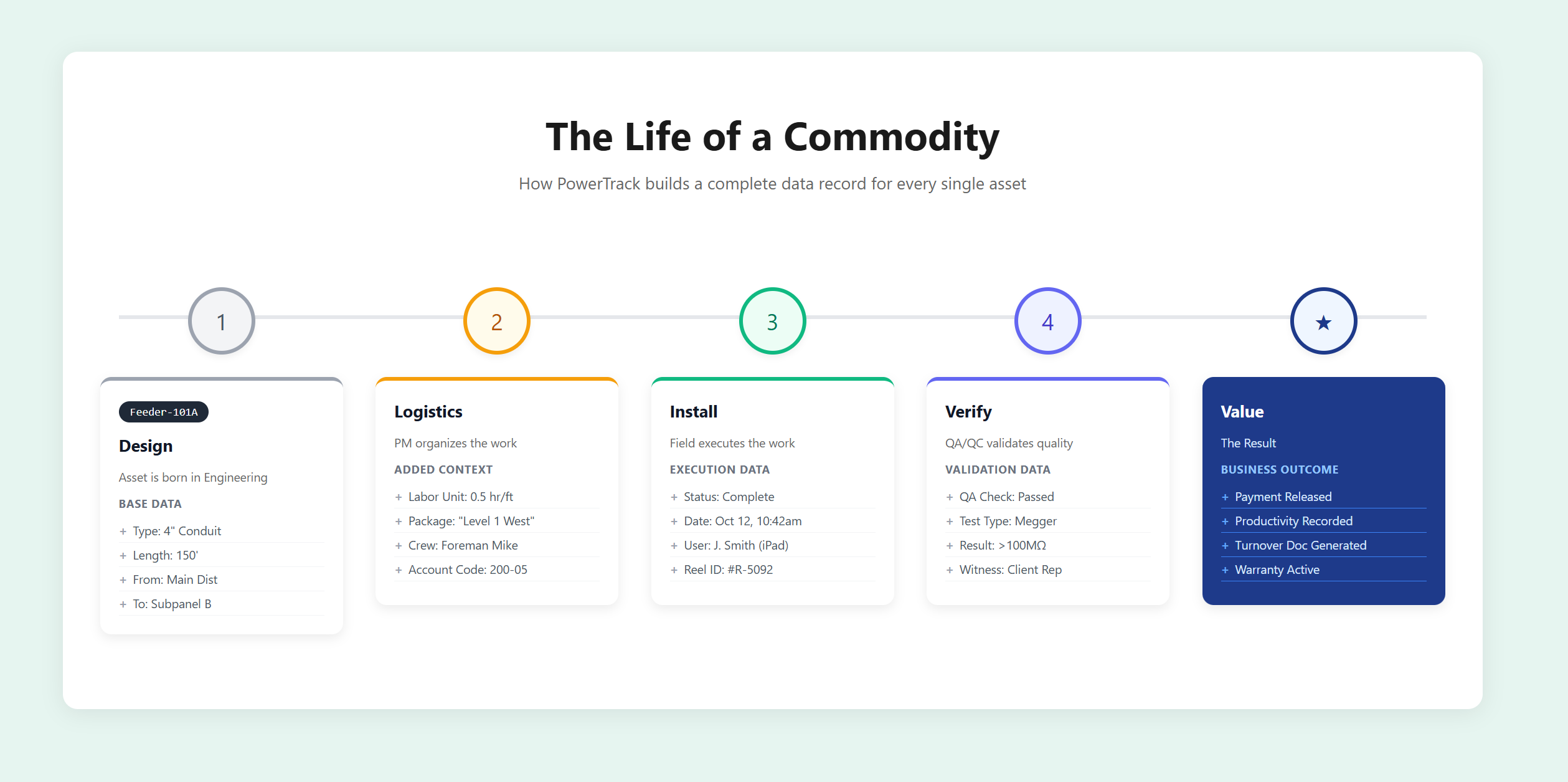
- Earned Hours represent what the work should have taken, calculated by multiplying installed quantities by labor units from your estimate.
- Burned Hours represent what you actually spent, pulled directly from timesheets.
A Productivity Factor above 1.0 means you're beating your estimate. Below 1.0? You're losing ground.
But the real power isn't in the top-line number—it's in the breakdown. PowerTrack lets you slice productivity by crew, commodity, and area. Suddenly you can see that Foreman Mike runs 30% ahead of estimate, while 2" rigid conduit consistently underperforms. That's not a crew problem—that's a labor unit problem in your estimate.
This visibility turns reactive project management into proactive decision-making. Fix the estimate. Reassign resources. Course-correct before it's too late.
Stop guessing. Start measuring.