The 30-Year Evolution Behind PowerTrack
PowerTrack isn't a startup experiment—it's the modern expression of a methodology proven across decades of large-scale industrial electrical construction: powerhouses, steel mills, ethanol plants, data centers, and yes—even NASA's Space Launch Complex 41.
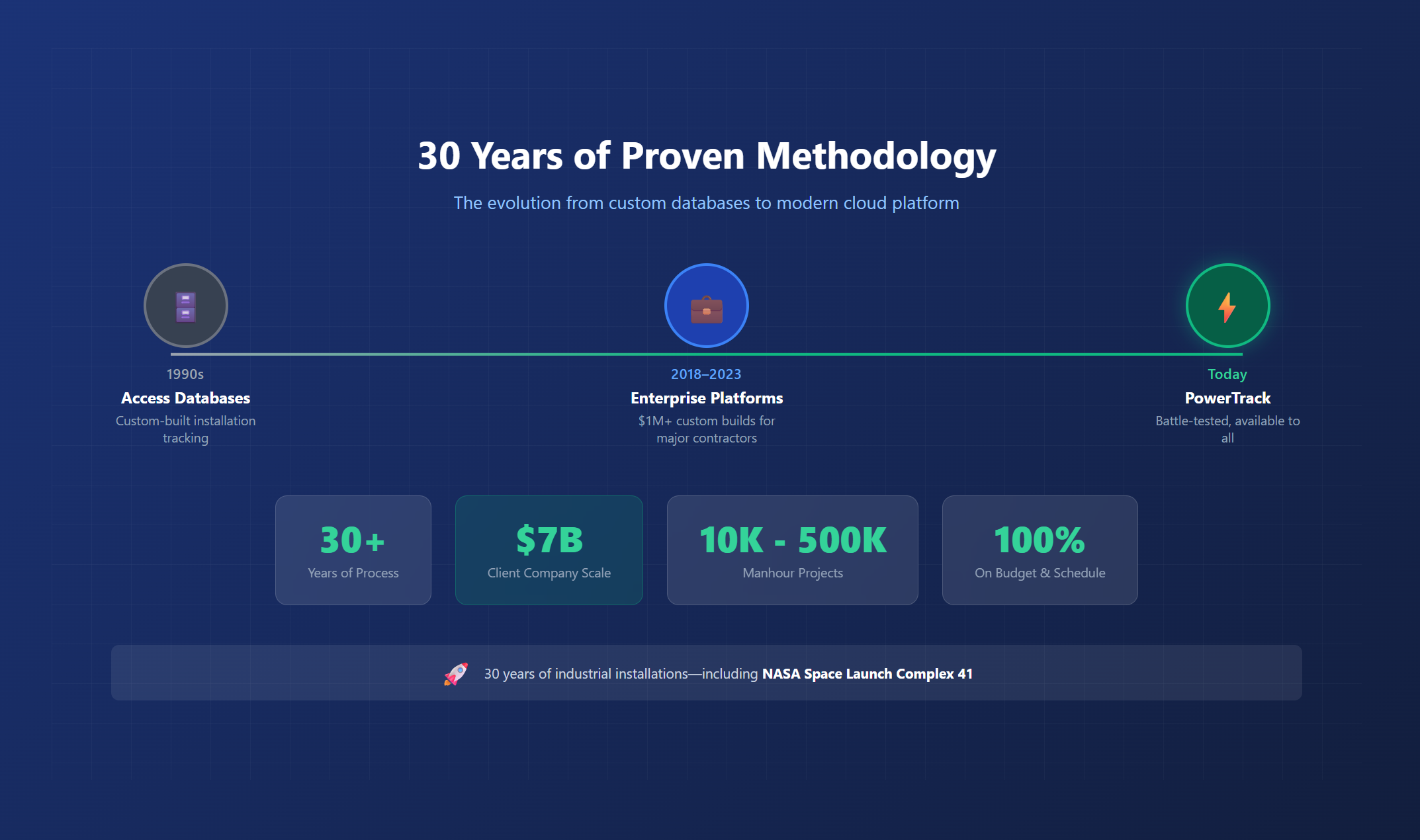
PowerTrack isn't a startup experiment—it's the modern expression of a methodology proven across decades and billions in project value.
When contractors evaluate new software, the first question is usually: "Who built this, and do they actually understand our work?"
It's a fair question. The electrical construction industry is littered with tools built by software companies who've never set foot on a job site. Generic project management platforms force you to adapt your proven workflows to their templates.
PowerTrack is different. Here's why.
A Methodology Proven Over 30+ Years
Long before cloud software and iPads, electrical contractors were solving the installation tracking problem with custom "installation databases"—purpose-built systems in Microsoft Access that tracked every cable, conduit, and piece of equipment from engineering through commissioning.
These weren't off-the-shelf tools. They were competitive advantages, built by contractors who understood that real-time visibility into progress and productivity was the difference between profitable projects and cost overruns.
One of the pioneers of this approach is our advisor Tom Mayo, a 50+ year veteran of electrical construction management. Tom has managed projects ranging from 50,000 to 500,000 manhours—all using this installation database methodology. All financially successful. All on schedule.
For over 30 years, this approach has kept complex installations on schedule and on budget. The projects vary—a Midwest ethanol facility, a major data center build, a steel mill expansion—but the methodology stays the same: structured commodity tracking, real-time progress visibility, and productivity intelligence that tells you where you stand before it's too late.
The most notable project? NASA's Space Launch Complex 41 at Cape Canaveral—the launch site that's sent Atlas V rockets carrying Mars rovers and crewed missions into space. But that's the outlier. The real proof is the years of industrial projects that came before and after it.

That same methodology is now built into PowerTrack.
Enliven's Journey: From Custom Builds to Product
PowerTrack didn't start as a product. It started as custom solutions for contractors who needed more than spreadsheets could provide.
Validated by the Best
During our 2023 engagement, we had the opportunity to work closely with Tom Mayo as a consultant. His experience managing some of the most complex electrical installations in the country gave us invaluable insight into what actually matters on the job site.
After seeing PowerTrack in action, Tom's assessment was clear:
"This is the best of the best. I could have run any project in my career with this software and had total control." — Tom Mayo, 50+ Year Industry Veteran
That's not marketing copy—it's the verdict of someone who has lived this work for half a century.
What This Means for You
When you evaluate PowerTrack, you're not looking at untested software from people who've never managed an installation. You're looking at:
Refined through iteration. PowerTrack isn't recycled code—it's the third-generation architecture, rebuilt from scratch using hard-won lessons from years of real contractor deployments.
Industry-proven methodology. The workflow, the data model, the approach to productivity tracking—all of it comes from decades of successful project delivery on some of the most demanding installations in the country.
Modern delivery. We've taken what worked in Access databases and Excel spreadsheets and rebuilt it with the kind of user experience that teams actually want to use.
PowerTrack isn't a new idea. It's a proven approach, finally available to every contractor who needs it.